The classic American debate.
Wherever you fall on the debate, the truth will remain that Pandora's box is already opened. There can be no gun free USA.
The argument however remains divisive and lacks any sense, especially from the pro-gun advocates.
First up, it's extremely naive to believe an armed population is somehow going to stop tyranny.
It's an argument I see constantly, and yet those most vocal about it never DO shit about their own corrupt and abusive government.
Congress is (and has been for a while) less popular than the British during colonial rule.
Where's the revolution, boys and girls?
Why not look to other nations with mass gun ownership. I don't see much democracy and free association going on.
Plenty of civil unrest, war and violence though.
This is not an argument for gun control.
It's an argument against bullshit justifications for gun ownership.
Banning guns in the US will never work, stop pretending that is the end goal for gun control.
Banning guns may not ever be the correct response to gun crime, but regulations and restrictions are not the same as a ban.
There is no need to parrot meaningless rhetoric as your argument to keep your precious guns.
Gun ownership doesn't make any individual bad, and obviously those that legally own a firearm are not the criminals, but widely available guns certainly incentivise their use and make them more accessible
If you like to hunt or sport shoot, that's awesome. If you like to collect? Great.
If you think owning a gun makes you safer? You are an idiot.
I get the idea of self defence, but it's largely an illusion. There really is no such thing as safety.
We live in a world of 7+ billion people.
Even the most well armed and skilled individual can be overcome with numbers, and numbers the human race has in abundance.
Using a gun as a safety blanket strikes me as silly.
For every instance where gun ownership makes you more safe, there are many in which it makes you less safe.
A reasonable and rational person will weigh these risks and decide, and that I can respect.
Anybody
that imagines their sidearm is going to prevent government corruption,
or their arrest (lawful or otherwise) is frankly delusional.
Anybody that thinks good guys with guns are a necessary counter to bad guys with guns really does not know how life works.
The fantasy of being a hero and shooting the bad guy is a great one.
It's understandable.
Hell, I even admit to it myself, and I think "death by cop" is absolutely justifiable (even if we remove the cop. I think criminals forfeit the right to their safety even though I'm a bleeding heart. A criminal is not as deserving of respect or empathy as a non criminal, though bloodshed is always best avoided)
Perhaps home or personal defence really do justify gun ownership and I'm simply a cynic, but what I do know is that an untrained individual with a gun that is stored unsafely and poorly maintained is not a person I would trust to use it properly.
Gun ownership and gun control are complex issues.
When politicians declare arbitrary kinds of guns illegal they do a disservice to the conversation every bit as much as the nuts that think a rifle will end tyranny.
I only hope that sensible voices win out in the long run.
Showing posts with label Politics. Show all posts
Showing posts with label Politics. Show all posts
Monday, 15 June 2015

Friday, 12 June 2015
Self made fortune: How wealth is a colloboration, no matter how hard an individual works, even alone.
As in the previous post, I wanted to discuss the idea of wealth and how only society has enabled individuals to amass and protect it.
In most instances this is FAR too complex to even approach an explanation of in short form. The dependence of everyone on the systems we have developed over the vast expanse of human history if a marvel to an inquiring mind.
I will choose to pick my favourite example, as it is simple in the extreme and inarguably those that gain success with it have done all the work themselves.
I am talking, of course, of writing.
A best selling author will probably only make a modest sum, but occasionally a writer will hit the jackpot, finding fame and fortune.
The thing they sell to the masses is an idea. Perhaps an idea in long form, but it has no other value.
Now, this author that has achieved such success has earned it. They did the work and deserve the credit, but even still they rely on a system so heavily that whatever price they pay in tax is a small price for what they gained.
Let us begin with the direct help a writer will receive and likely pay for directly with a share of the "profit" or as a service.
Now, some take a significant portion of the proceeds from selling books, but I do not imagine a single instance of self publishing working better in terms of audience reach (perhaps crowd funding would be more financially rewarding for many aspiring authors, but with less possibility for commercial success)
The book is a physical object, the production of it is reliant on so much infrastructure, labour and human invention that books were an object of immense value for most of human history; not something to jot down a yarn on for the general public. From growing the raw materials to making the paper and ink, to the manufacture of machinery need for this and for the printing... No one person could accomplish all of this, no matter how awesome their book.
But this is only the beginning.
It would take a very long time for a writer to deliver copies of their book to every buyer and so we have.
Except there is more.
Who exactly is the audience for this? It is almost certainly not written in a language created entirely by our hypothetical author? How is the author even receiving value for this idea of theirs? Did they emerge from the womb with such ideas fully formed as if by divine inspiration?
Even this one VERY limited example is of such complexity that my short explanations barely do it justice. I'm shining a beam torch in a cavern.
Imagine how much more reliant on our systems other endeavours might be.
Always keep in mind that no man is an island.
Without society, without our communities, shared culture and even (*cue dramatic music*) the state, there would be no support to hold up the successful.
If the world operated best on "enlightened self interest" (an oft invoked excuse for selfishness) as the only way forward, why are the most dominant species ALWAYS communal? Why indeed do humans find the best success in groups? Could it be that cooperation and the altruism required to make it work is... pragmatic?
Put away the childish objectivist or self serving attitudes.
Realise that meritocracy, liberty and personal success are not antithetical to the principles of community, but that community serves those principles (or damn well should do)
Remember, those decrying the state and the payment of taxes are in a very real sense the most reliant on the things those taxes pay for.
Without "the state" a poor person remains poor; a rich person *becomes* poor.
Who should have the largest incentive, the largest responsibility, the largest share of the burden to preserve these systems?
History reveals that throughout all times until recently those with the greatest wealth realised they had the most to lose. Noblesse oblige was about true "enlightened self interest" as much as it was a moral imperative for those in power not to abuse their status.
In short, those that benefit most from the system should be footing the fucking bill, not finding excuses to put that burden on others.
In most instances this is FAR too complex to even approach an explanation of in short form. The dependence of everyone on the systems we have developed over the vast expanse of human history if a marvel to an inquiring mind.
I will choose to pick my favourite example, as it is simple in the extreme and inarguably those that gain success with it have done all the work themselves.
I am talking, of course, of writing.
A best selling author will probably only make a modest sum, but occasionally a writer will hit the jackpot, finding fame and fortune.
The thing they sell to the masses is an idea. Perhaps an idea in long form, but it has no other value.
Now, this author that has achieved such success has earned it. They did the work and deserve the credit, but even still they rely on a system so heavily that whatever price they pay in tax is a small price for what they gained.
Let us begin with the direct help a writer will receive and likely pay for directly with a share of the "profit" or as a service.
- The professional editing of the manuscript
- The physical printing of the book
- The promotion of the book
Now, some take a significant portion of the proceeds from selling books, but I do not imagine a single instance of self publishing working better in terms of audience reach (perhaps crowd funding would be more financially rewarding for many aspiring authors, but with less possibility for commercial success)
The book is a physical object, the production of it is reliant on so much infrastructure, labour and human invention that books were an object of immense value for most of human history; not something to jot down a yarn on for the general public. From growing the raw materials to making the paper and ink, to the manufacture of machinery need for this and for the printing... No one person could accomplish all of this, no matter how awesome their book.
But this is only the beginning.
It would take a very long time for a writer to deliver copies of their book to every buyer and so we have.
- Transport of the books to retailers
- The infrastructure allowing this transport
- Safe storage of the books
- Retail outlets that stock the book
- advertisement of the book (related to the above promotion of the book, but not limited to it)
Except there is more.
Who exactly is the audience for this? It is almost certainly not written in a language created entirely by our hypothetical author? How is the author even receiving value for this idea of theirs? Did they emerge from the womb with such ideas fully formed as if by divine inspiration?
- The education system (without which, there would be no audience)
- Human culture (without which, the ideas would have no context)
- Language (who would understand it if it didn't use some form of shared lexicon)
- Communications networks (without this, the idea wouldn't spread to become popular)
- Currency (how you get paid)
- Law enforcement (how your stuff doesn't get nicked)
- The courts (how you enforce contracts and ensure fair play)
Even this one VERY limited example is of such complexity that my short explanations barely do it justice. I'm shining a beam torch in a cavern.
Imagine how much more reliant on our systems other endeavours might be.
Always keep in mind that no man is an island.
Without society, without our communities, shared culture and even (*cue dramatic music*) the state, there would be no support to hold up the successful.
If the world operated best on "enlightened self interest" (an oft invoked excuse for selfishness) as the only way forward, why are the most dominant species ALWAYS communal? Why indeed do humans find the best success in groups? Could it be that cooperation and the altruism required to make it work is... pragmatic?
Put away the childish objectivist or self serving attitudes.
Realise that meritocracy, liberty and personal success are not antithetical to the principles of community, but that community serves those principles (or damn well should do)
Remember, those decrying the state and the payment of taxes are in a very real sense the most reliant on the things those taxes pay for.
Without "the state" a poor person remains poor; a rich person *becomes* poor.
Who should have the largest incentive, the largest responsibility, the largest share of the burden to preserve these systems?
History reveals that throughout all times until recently those with the greatest wealth realised they had the most to lose. Noblesse oblige was about true "enlightened self interest" as much as it was a moral imperative for those in power not to abuse their status.
In short, those that benefit most from the system should be footing the fucking bill, not finding excuses to put that burden on others.
Wednesday, 10 June 2015
A political allegory: The chairmaker.
Politics is a harsh mistress, and misunderstandings are responsible for much of the bad blood.
I hope to alleviate some of the ignorance with a story.
A man makes the best chairs in his community.
Everybody can make a place to sit, or sit on the floor, but the chairs this individual produces are better than any other.
Now, in order to make a chair he must secure and mature the wood, assemble the chair and either use it, or find somebody that will exchange something of value for it. (amongst many other tasks)
Operating on his own, only a small amount of his time is taken producing the thing he is best at. Much of his chair producing time is taken up by tasks he is perfectly capable of, but perhaps not the best at or which anybody could do.
And so, our intrepid chair maker asks another to chop down trees to produce the lumber he needs. He allows others to do the less skilled tasks involved in the production of the chair itself, he allows another to sell the final product.
He is now a job creator. An entrepreneur. He found a market for chairs and he fulfilled that need.
Perhaps he expands his business by training others in his methods so that he has skilled help. Perhaps he patents his ideas and allows others to use his ingenuity.
To me, this chairmaker represents the ideals most people want to support, whatever politics they choose. I do not think I would hear disagreement from conservative, libertarian, liberal or socialist on this matter.
The man is entitled to the fruits of his labour, and he got there through merit.
What I will suggest is that many believe they are supporting the chairmaker against the evils of those workers perhaps jealous of his success, or of the state body overseeing the lives of all, but they are not.
The man who owns the land the trees are grown on, the building the chairmaker works in , the home he lives in. That is the person supported by populist policies on the right, that is the kind of person most usually claiming the title of "job creator"
Not a person that makes, produces or envisions. Just a person that owns things.
A socialist, on the other hand, believes that work has value, ownership does not.
Should the chairmaker exploit those helping him produce his chairs, he makes an enemy of socialist ideology, but he is not inherently so.
I'd suggest that such a "business" as I have outlined is *entirely* in keeping with socialism. Each contributes, each is afforded a share of the fruits of their labours.
As much as the chair maker here is responsible for the livelihoods of many, without those helping him he would not have achieved so much. The point being is that large endeavours require cooperation and inter-reliance.
Any billionaire or multimillionaire that declares themselves "self made" is entirely delusional. (the caveat being that many are aware of the reality and are simply being poetic, which is awesome)
They were reliant on the system they made their fortune in and on the work of those they employed. No man is an island.
If you personally believe that capital (the wealth one possesses) is more important than the work one does, then you do not support the chair maker. You do not support those that create the wealth.
You support the parasites that add no value to the system.
I often hear admonishments that capital gains tax is essentially taxing a person twice, as they already earned the money.
I think this is laughable and makes no sense to a rational mind.
What these people are suggesting is that money which is earned by your money is worth more than money you earn through work.
In a very real sense they are suggesting that the ownership of wealth has more value than the production of wealth.
Now, does this mean investment is evil or worthless?
Of course not!
But due consideration much be made as to the value of investment over work.
Should buying the labour of others be worth more than the labour itself?
We live in a capitalist world, and capitalism has proven to be a very successful tool that works well in many situations.
Socialism aspires to build a better mousetrap, but social democracies prove that socialists have always been willing to embrace the ideas that work.
Bear that in mind when you hear from political ideologues how compromise is evil.
Who would you trust? A political philosophy willing to embrace what works, or one which demonises all opposition at all times?
Regardless of your preferred politics, support the chair maker. Don't blindly support rhetoric on claims of how much it will help those intrepid chair makers of tomorrow.
I hope to alleviate some of the ignorance with a story.
A man makes the best chairs in his community.
Everybody can make a place to sit, or sit on the floor, but the chairs this individual produces are better than any other.
Now, in order to make a chair he must secure and mature the wood, assemble the chair and either use it, or find somebody that will exchange something of value for it. (amongst many other tasks)
Operating on his own, only a small amount of his time is taken producing the thing he is best at. Much of his chair producing time is taken up by tasks he is perfectly capable of, but perhaps not the best at or which anybody could do.
And so, our intrepid chair maker asks another to chop down trees to produce the lumber he needs. He allows others to do the less skilled tasks involved in the production of the chair itself, he allows another to sell the final product.
He is now a job creator. An entrepreneur. He found a market for chairs and he fulfilled that need.
Perhaps he expands his business by training others in his methods so that he has skilled help. Perhaps he patents his ideas and allows others to use his ingenuity.
To me, this chairmaker represents the ideals most people want to support, whatever politics they choose. I do not think I would hear disagreement from conservative, libertarian, liberal or socialist on this matter.
The man is entitled to the fruits of his labour, and he got there through merit.
What I will suggest is that many believe they are supporting the chairmaker against the evils of those workers perhaps jealous of his success, or of the state body overseeing the lives of all, but they are not.
The man who owns the land the trees are grown on, the building the chairmaker works in , the home he lives in. That is the person supported by populist policies on the right, that is the kind of person most usually claiming the title of "job creator"
Not a person that makes, produces or envisions. Just a person that owns things.
A socialist, on the other hand, believes that work has value, ownership does not.
Should the chairmaker exploit those helping him produce his chairs, he makes an enemy of socialist ideology, but he is not inherently so.
I'd suggest that such a "business" as I have outlined is *entirely* in keeping with socialism. Each contributes, each is afforded a share of the fruits of their labours.
As much as the chair maker here is responsible for the livelihoods of many, without those helping him he would not have achieved so much. The point being is that large endeavours require cooperation and inter-reliance.
Any billionaire or multimillionaire that declares themselves "self made" is entirely delusional. (the caveat being that many are aware of the reality and are simply being poetic, which is awesome)
They were reliant on the system they made their fortune in and on the work of those they employed. No man is an island.
If you personally believe that capital (the wealth one possesses) is more important than the work one does, then you do not support the chair maker. You do not support those that create the wealth.
You support the parasites that add no value to the system.
I often hear admonishments that capital gains tax is essentially taxing a person twice, as they already earned the money.
I think this is laughable and makes no sense to a rational mind.
What these people are suggesting is that money which is earned by your money is worth more than money you earn through work.
In a very real sense they are suggesting that the ownership of wealth has more value than the production of wealth.
Now, does this mean investment is evil or worthless?
Of course not!
But due consideration much be made as to the value of investment over work.
Should buying the labour of others be worth more than the labour itself?
We live in a capitalist world, and capitalism has proven to be a very successful tool that works well in many situations.
Socialism aspires to build a better mousetrap, but social democracies prove that socialists have always been willing to embrace the ideas that work.
Bear that in mind when you hear from political ideologues how compromise is evil.
Who would you trust? A political philosophy willing to embrace what works, or one which demonises all opposition at all times?
Regardless of your preferred politics, support the chair maker. Don't blindly support rhetoric on claims of how much it will help those intrepid chair makers of tomorrow.
Wednesday, 27 May 2015
Who benefits most from society?
This is a big topic.
Without a doubt, civilisation DOES benefit those living in it.
Now, there are sociological arguments that isolation and barbarism (for want of a better term) are not bad, but I for one enjoy the benefits of the modern world which would be impossible without our sprawling and interconnected cultures.
Many would suggest that the greatest benefits of civil society are enjoyed by the poor through welfare and charity.
These are certainly advantages bought about through our social contracts, and a great argument for our nature as nurturing and empathetic creatures.
I would argue that whatever the advantages enjoyed by the poor and disadvantaged in society, they are dwarfed by the advantages garnered by the wealth classes.

Take a look at the world and examine the lives of its peoples.
Many argue that greater freedom results in increased wealth and less reliance on state.
Observation should inform people otherwise.
Freedom comes with costs.
Absolute freedom results in chaos, poverty, crime and war.
Every nation without a strong governing body is rife with conflict and poverty, regardless of natural wealth. Even areas within advanced nations without a welcome and positive police presence are more dangerous.
So, when society places restrictions on people (which it must) what we see is often greater personal freedom for the majority.
We can argue where limits should be placed and what constitutes an attack on personal liberty, but I do not believe that anyone supports absolute freedom, as such a position is self defeating.
Tax pays for the structure of society, and we are told that the rich are overburdened because they pay more than the poor. The poor make use of lots of government resources, so the burden to pay for these services should rest on those that use them.
To me, this is fallacious.
Who benefits the most from education?
The individual pupil?
I do not think you would find many that would agree.
No, society as a whole benefits from an educated population, and the wealth classes leverage this population for their endeavours. An educated worker is more useful than an uneducated one. This is irrefutable.
This is not exploitation on either side, when done well, but a partnership.
Without the expenditure by the government through tax, employers would not have skilled people to employ. An illiterate and innumerate population would produce far less value, to say nothing of advanced education.
This thinking extends to everything.
Who benefits from roads?
The individual motorist can get to work, absolutely, but the company he works for relies on the roads for ALL of their staff to arrive. The drivers themselves use the roads, but others indirectly benefit from that infrastructure.
If you look at wealth distribution, you see that the richest people in the world make their money in the markets of societies in which they complain about paying too much tax.
They believe their contributions to society are unfair, despite their wealth being ENTIRELY RELIANT on that society.
To me, this is a simple, self explanatory concept.
They are riding the horse, but refuse to pay for its feed, stable and grooming.
Just because they do not benefit directly from a state handout does not mean they are not utterly reliant on the system they rail against.
Largely that last sentence is untrue anyway, as the burden felt by business and the independently wealthy is often massively alleviated by tax breaks, refunds and subsidies.
The misleading idea that marginal tax rates are the rate of tax an individual or institution pays is responsible for much of the support for lowering taxes.


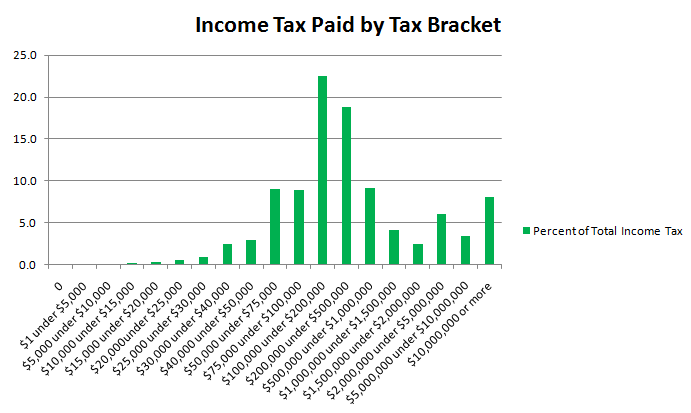
This is not to say that those contributing the most to society are unworthy of praise or should be vilified, I have nothing against people working for wealth (I have many things to say against cronyism and wealth, as in capital, having more value than work)
I just believe that they must begin to recognise that they are the most reliant on that society. They have the most to lose. Their contributions to society are essential, but they are not inherently noble or virtuous. They should pay most in because they do in fact get most out. If you earn two thirds of the wealth you should be paying two thirds of the tax bill, not complaining that the poor don't shoulder more of the burden.
You are engaged in a partnership with society, value for value.
Try not to escape the obligation you have to the society that enabled you to succeed.
Without a doubt, civilisation DOES benefit those living in it.
Now, there are sociological arguments that isolation and barbarism (for want of a better term) are not bad, but I for one enjoy the benefits of the modern world which would be impossible without our sprawling and interconnected cultures.
Many would suggest that the greatest benefits of civil society are enjoyed by the poor through welfare and charity.
These are certainly advantages bought about through our social contracts, and a great argument for our nature as nurturing and empathetic creatures.
I would argue that whatever the advantages enjoyed by the poor and disadvantaged in society, they are dwarfed by the advantages garnered by the wealth classes.

This shows who is getting the most out of society in a very real & direct way
Two thirds of the wealth is owned by the top 5%
Their tax burden is not 2/3rds of tax revenue.
Take a look at the world and examine the lives of its peoples.
Many argue that greater freedom results in increased wealth and less reliance on state.
Observation should inform people otherwise.
Freedom comes with costs.
Absolute freedom results in chaos, poverty, crime and war.
Every nation without a strong governing body is rife with conflict and poverty, regardless of natural wealth. Even areas within advanced nations without a welcome and positive police presence are more dangerous.
So, when society places restrictions on people (which it must) what we see is often greater personal freedom for the majority.
We can argue where limits should be placed and what constitutes an attack on personal liberty, but I do not believe that anyone supports absolute freedom, as such a position is self defeating.
Tax pays for the structure of society, and we are told that the rich are overburdened because they pay more than the poor. The poor make use of lots of government resources, so the burden to pay for these services should rest on those that use them.
To me, this is fallacious.
Who benefits the most from education?
The individual pupil?
I do not think you would find many that would agree.
No, society as a whole benefits from an educated population, and the wealth classes leverage this population for their endeavours. An educated worker is more useful than an uneducated one. This is irrefutable.
This is not exploitation on either side, when done well, but a partnership.
Without the expenditure by the government through tax, employers would not have skilled people to employ. An illiterate and innumerate population would produce far less value, to say nothing of advanced education.
This thinking extends to everything.
Who benefits from roads?
The individual motorist can get to work, absolutely, but the company he works for relies on the roads for ALL of their staff to arrive. The drivers themselves use the roads, but others indirectly benefit from that infrastructure.
If you look at wealth distribution, you see that the richest people in the world make their money in the markets of societies in which they complain about paying too much tax.
They believe their contributions to society are unfair, despite their wealth being ENTIRELY RELIANT on that society.
To me, this is a simple, self explanatory concept.
They are riding the horse, but refuse to pay for its feed, stable and grooming.
Just because they do not benefit directly from a state handout does not mean they are not utterly reliant on the system they rail against.
Largely that last sentence is untrue anyway, as the burden felt by business and the independently wealthy is often massively alleviated by tax breaks, refunds and subsidies.
The misleading idea that marginal tax rates are the rate of tax an individual or institution pays is responsible for much of the support for lowering taxes.

This shows the effective rates of tax on individuals
It can be applies generally with some caveats
Note how the corporate entities pay significantly less than individuals
As you can see, it is neither rich nor poor individuals that have "no skin in the game"

Compare these two images to the first image on this post.
Think about how you are told that the rich pay "too much"
We are left in a world where those drawing most benefit from the system complain if asked to pay a fair share back into it; believing the convenient self deception that their wealth is magically produced by their own ingenuity, and not a product of the Nation in which they reside.This is not to say that those contributing the most to society are unworthy of praise or should be vilified, I have nothing against people working for wealth (I have many things to say against cronyism and wealth, as in capital, having more value than work)
I just believe that they must begin to recognise that they are the most reliant on that society. They have the most to lose. Their contributions to society are essential, but they are not inherently noble or virtuous. They should pay most in because they do in fact get most out. If you earn two thirds of the wealth you should be paying two thirds of the tax bill, not complaining that the poor don't shoulder more of the burden.
You are engaged in a partnership with society, value for value.
Try not to escape the obligation you have to the society that enabled you to succeed.
Friday, 22 May 2015
Thoughts on Liberalism.
Liberalism.
Much maligned and often misrepresented (even by it's staunch proponents) it is without doubt one of the most important political ideologies in human history.
First, to nail down my definition.
A liberal portion is generous, a liberal attitude is tolerant or moderate.
As a political principle liberalism has always placed personal liberty, freedom of expression and secular society highly.
If you believe in freedom of speech (no matter how offensive), the free market and freedom of (or from) religion, you are practising Liberal attitudes. (note: Liberalism as a movement or ideology does not have a monopoly on these things, but the point remains)
In the UK, Liberalism has maintained it's definition.
It is the middle ground between conservatives and socialists.
Now, in some ways this is immensely positive as all mainstream parties have adopted some measure of liberalism, as have the core political ideologies behind them.
In others it has come to reflect a lack of conviction, fence sitting indecision and conflicting policies.
Small L liberalism has won throughout the Western world, and no amount of pretending the word is a curse word will change that reality.
Sadly, American Liberalism (and the political left internationally) has been somewhat coopted by groups and individuals that are not liberal at all.
Anything that undermines individual freedom is against liberalism.
This is a hard line, but difficult to describe.
Personal liberty must have some limit, or I could just walk into your house and take your shit.
I think it's fairly obvious when we are limited so that others may be extended their rights, but there is plenty of ambiguity to argue over the specifics.
Anyone suggesting that individual rights are somehow subordinate to the needs of society is not a liberal.
Free Markets.
Liberalism does not promote state capitalism or socialism.
One of the core tenets of liberalism are property rights, which are the basis of capitalist economies; flawed though I find our modern standards they're a damn sight better than history can provide. Capitalism is not perfect. Anyone saying it is needs to be taken into a padded room, but much like democracy itself; it's an horrendous way of doing things, the only virtue being that it's superior to all alternatives.
Anyone opposing capitalism (even as much as I do, which is to focus on the criticisms) is not a liberal.
Secular society.
Religious tolerance is the cornerstone of liberalism.
Sadly, this is often taken to ridiculous extremes lately with much "progressive" media desperate to defend intolerable religious practices and preach moral relativism.
This can only end in division and intolerance reciprocated from both sides of the divide created.
Anybody suggesting that the religious rights of one person or ideology should be afforded extra protection or reverence is not a liberal.
Now "Social Liberalism" as an ideology complicates matters, but honestly I see it as entirely unrelated to liberalism as an economic or political philosophy.
This laudable set of values grew from classical liberalism, but is such a diverse and divisive concept that it should be placed firmly in it's own category.
For one, I believe that almost the entire Western world is socially liberal.
The trouble comes when zealous ideologues use people's altruistic desires for a tolerant and inclusive culture to promote attitudes of intolerance, bigotry and blame.
This has been a growing problem amongst liberals and the political left, as "call out culture" reaches new heights, all in the name of "inclusion"
The dichotomy and hypocrisy of the practice disturbs me more because so many people refuse to condemn it.
Liberalism might have sown the seeds of social liberalism, and the ubiquity of social liberalism might have allowed the authoritarian "progressives" we should rightly and ironically label "social justice warriors" to flourish, but they are none of them synonymous.
I for one hope that Libertarians will reach a moderate consensus and appreciate just how much they share with Liberals they so often vilify.
Only by unifying reasonable people across political divides can we hope to combat the identity politics endemic on the extreme ends of all ideologies.
Iidentity politics are as inimical to liberalism as they are to libertarians.
Much maligned and often misrepresented (even by it's staunch proponents) it is without doubt one of the most important political ideologies in human history.
First, to nail down my definition.
A liberal portion is generous, a liberal attitude is tolerant or moderate.
As a political principle liberalism has always placed personal liberty, freedom of expression and secular society highly.
If you believe in freedom of speech (no matter how offensive), the free market and freedom of (or from) religion, you are practising Liberal attitudes. (note: Liberalism as a movement or ideology does not have a monopoly on these things, but the point remains)
In the UK, Liberalism has maintained it's definition.
It is the middle ground between conservatives and socialists.
Now, in some ways this is immensely positive as all mainstream parties have adopted some measure of liberalism, as have the core political ideologies behind them.
In others it has come to reflect a lack of conviction, fence sitting indecision and conflicting policies.
Small L liberalism has won throughout the Western world, and no amount of pretending the word is a curse word will change that reality.
Sadly, American Liberalism (and the political left internationally) has been somewhat coopted by groups and individuals that are not liberal at all.
Anything that undermines individual freedom is against liberalism.
This is a hard line, but difficult to describe.
Personal liberty must have some limit, or I could just walk into your house and take your shit.
I think it's fairly obvious when we are limited so that others may be extended their rights, but there is plenty of ambiguity to argue over the specifics.
Anyone suggesting that individual rights are somehow subordinate to the needs of society is not a liberal.
Free Markets.
Liberalism does not promote state capitalism or socialism.
One of the core tenets of liberalism are property rights, which are the basis of capitalist economies; flawed though I find our modern standards they're a damn sight better than history can provide. Capitalism is not perfect. Anyone saying it is needs to be taken into a padded room, but much like democracy itself; it's an horrendous way of doing things, the only virtue being that it's superior to all alternatives.
Anyone opposing capitalism (even as much as I do, which is to focus on the criticisms) is not a liberal.
Secular society.
Religious tolerance is the cornerstone of liberalism.
Sadly, this is often taken to ridiculous extremes lately with much "progressive" media desperate to defend intolerable religious practices and preach moral relativism.
This can only end in division and intolerance reciprocated from both sides of the divide created.
Anybody suggesting that the religious rights of one person or ideology should be afforded extra protection or reverence is not a liberal.
Now "Social Liberalism" as an ideology complicates matters, but honestly I see it as entirely unrelated to liberalism as an economic or political philosophy.
This laudable set of values grew from classical liberalism, but is such a diverse and divisive concept that it should be placed firmly in it's own category.
For one, I believe that almost the entire Western world is socially liberal.
The trouble comes when zealous ideologues use people's altruistic desires for a tolerant and inclusive culture to promote attitudes of intolerance, bigotry and blame.
This has been a growing problem amongst liberals and the political left, as "call out culture" reaches new heights, all in the name of "inclusion"
The dichotomy and hypocrisy of the practice disturbs me more because so many people refuse to condemn it.
Liberalism might have sown the seeds of social liberalism, and the ubiquity of social liberalism might have allowed the authoritarian "progressives" we should rightly and ironically label "social justice warriors" to flourish, but they are none of them synonymous.
I for one hope that Libertarians will reach a moderate consensus and appreciate just how much they share with Liberals they so often vilify.
Only by unifying reasonable people across political divides can we hope to combat the identity politics endemic on the extreme ends of all ideologies.
Iidentity politics are as inimical to liberalism as they are to libertarians.
Friday, 15 May 2015
Thoughts on Libertarianism.
Libertarianism is becoming more mainstream as a political alternative.
This is a good thing, as it reflects a great deal of common ground amongst political moderates that were otherwise polarised.
I do not however agree with the principles espoused by proponents of libertarianism, nor some of the methods or rhetoric employed.
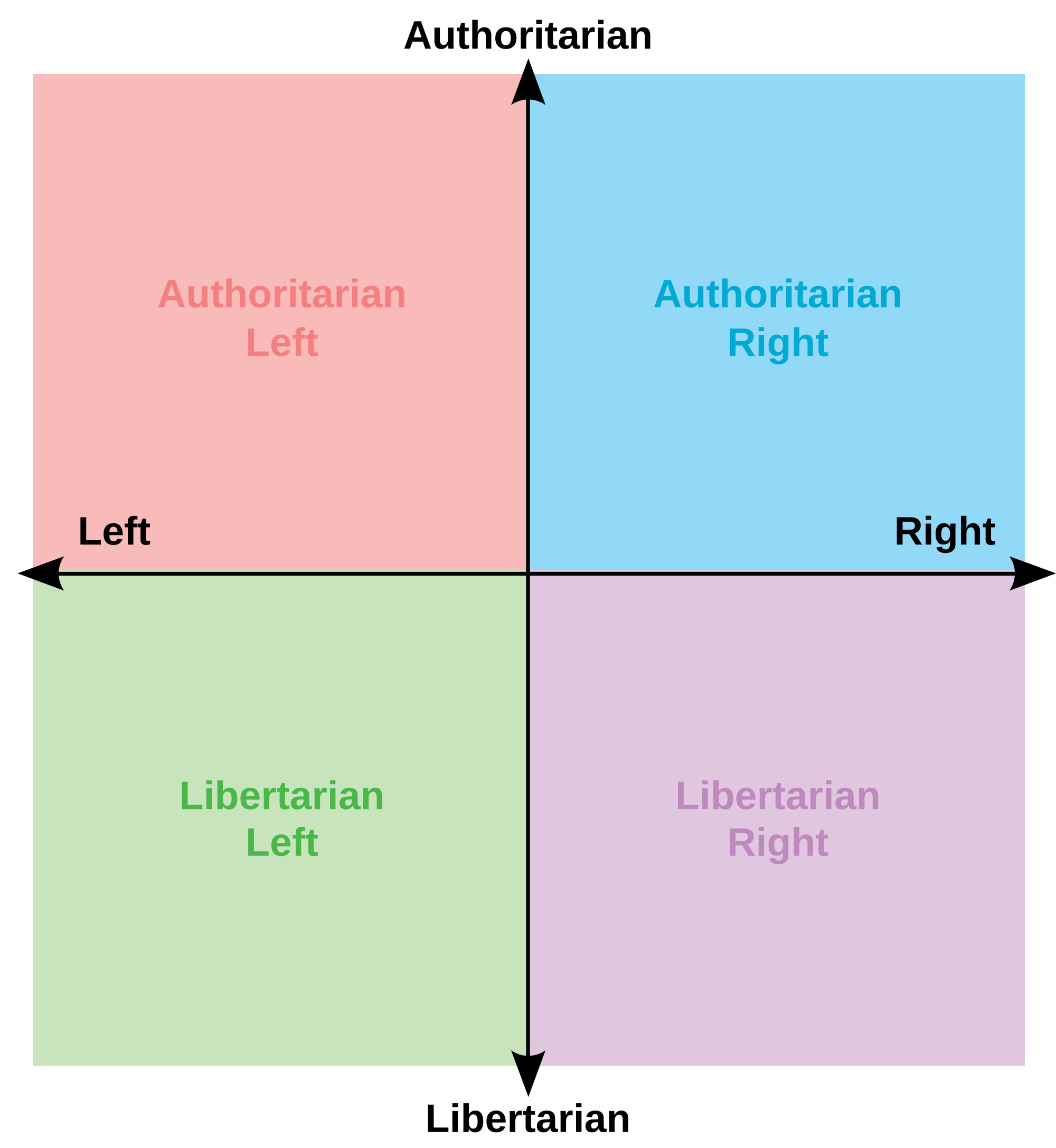 This does outline genuine differences in political opinion, but it also serves to characterise what has historically ALWAYS been left wing (anti authoritarian) as actually right wing (because we should all be able to agree that "libertarian" is a term popularised and utilised by the political right)
I see this kind of compass most often invoked (outside of #gamergate) to discredit the left or at best to promote the horseshoe theory that the extremes of either political wing are indistinguishable. (a theory I am happy to concede has great merit)
Many people claim to lean libertarian, or be right libertarian, but practice and preach the exact policies and justifications of the "authoritarian right"
Others merely excuse such with claims that a free market will ensure bad elements of such political movements will be out competed (people should "vote with their feet" and leave places that don't serve their needs)
Libertarians reading this: if you can not admit that big business is culpable in corruption, and that deregulation has allowed this to happen, you are simply an authoritarian that wants YOUR ideas to be enforced.
When I start seeing libertarians call out corruption, collusion and malpractice from avowed libertarians, maybe I'll appreciate the distinction more.
I'll leave my thoughts on socialism for another day, where I hope to outline exactly WTF it is clearly.
Please note libertarian readers: If you demonise somebody because they have a different set of political beliefs to you, how are you different from an authoritarian? You are demanding others conform with your beliefs, you are not engaging in debate and rebuttal, you are not practising an "open marketplace of ideas" (one of the few places I believe an absolute free market is essential)
If you want to say "classical liberals" fair enough, but understand that liberal only became a dirty word because of the authoritarian right you supposedly oppose.
I briefly discussed how common usage can influence meaning and nuance in defence of political correctness and believe it applies thoroughly with Liberal in American politics.
Perhaps some liberals have lost their way (they have, no "perhaps" necessary) but the fault largely lies in the very partisan divisions that the Republicans have driven in the electorate.
This does work both ways.
The liberal press, internationally, is disgustingly partisan and will often demonise the right or generalise anything it perceives as opposing modern liberalism. This is most clearly displayed with constant accusations of misogyny and racism with no room for nuance or empathy.
Any time you hear "right wing" being invoked to dismiss a person or idea, that is the exact problem I am talking about, and both "sides" are guilty of it.
The one I find most annoying is when those campaigning for or supporting a pro life position are said to hate women. No, I'd guess most pro life advocates really do care deeply about unborn children.
I vehemently disagree with them, but I know that *most* are reasonable people driven by altruism. Not bond villains that want to oppress women.
They just don't think it through and describe them.
Simply put; a man's freedom ends where another man's nose begins.
I think it's a principle most libertarians agree to, as it's all about volunteerism and zero harm, but no thought is put into what the allegory MEANS.
I see a lot of comments featuring some variation on "employers should do what they like, if you don't want to work for them, don't"
In an unregulated free market this is basically endorsing slavery. Not every employer will be unscrupulous, but not everyone can work for a moral employer. In the US *right now* large, wealthy and profitable corporations pay so little to their staff that the government must support them on welfare.
Getting rid of the welfare doesn't fix the problem.
Ensuring that employers cant exploit people does.
This is limiting the freedom of an employer to do as they please with their resources, but it prevents the freedoms of employees and competitors being infringed by crushing and unfair working conditions.
It's a balance, and I'd hope most can see that.
If you look to nations with absolute freedom (no tax, no state) you do not see a utopia. You know what you see, so stop pretending we can do without these things, even in hyperbole.
Absolute freedom means nothing more than that those with strength are free, and those without it are thralls.
Self interest is very human, understandable and in many cases necessary.
It is not, however, a virtue. You are not a better person by being selfish, you do not make the world a better place by always putting yourself first.
This contention aside, you cant praise the benefits of selfishness or greed in one breath and then absolve both of any responsibility for the DIRECT consequences of selfishness and greed.
Crony capitalism is BOTH OF THESE THINGS.
Just as with any tool (and greed/self interest are tools in the human arsenal, agreed) it is not always beneficial. It is not always appropriate. Sometimes, the application of the wrong tool can cause great harm.
When libertarians discuss corruption, it is exclusively the fault of the state. No reason is EVER provided except that the state is used to enforce the corrupt outcome.
If you don't understand why that is faulty logic, I cant help.
The state, in this case, is the tool of people motivated by the virtues you promote.
Greed is good is almost the most retarded thing anyone has ever repeated unironically.
It may not always be bad, it may inspire people to achieve, but it is at best an ambiguous mixed bag.
Studies have repeatedly shown that people can be motivated as well or better by other means than financial incentive.
Deal with it. Stop being naive. Money isn't everything, and you know it.
Charity, it is said, will solve all the problems government is left to deal with.
Get rid of welfare, public healthcare and similar programs, because generous people will solve those problems with charity!
This has never worked.
Government has ALWAYS had to intervene to assist the good works of private entities. This is not a bad thing, nor a good thing, it is just a necessary thing.
It is also at odds with the other assertion, that welfare actually HARMS people.
So, charity must step in so people can be given what they need by generous people (who will likely write if off on their taxes. ie: the government will pay) but the government doing this directly, with incentives and help for people to get out of welfare, is evil.
No explanations given, just "work is virtue" crap often repeated by people that have not done an honest days work in their lives.
Now, the welfare trap is VERY real.
But the problem isn't welfare itself. Industrialism causes this dependence.
In the last 200 years we have produced technology that enables us to do the work of DOZENS of people automatically, and reduce the work needed to accomplish many other tasks. The only result being less jobs are available. This is somewhat countered by other markets opening up. Consumerism is the ONLY reason we don't see mass starvation, because without it there would be no work for people to be paid so they could afford to eat the food produced by the VERY FEW people needed to produce enough food for everyone. If nobody could afford to buy the food produced by these people, it would rot in the fields.
It's a cycle of intermingled reliance, not a benevolent waterfall of wealth and resources from the top, with "job creators" our lord and saviour.
Welfare is a necessary bandaid over the problems caused by the very system we all understand is the best humans have come up with.
It might not be pleasant, it has bad effects as well as good, but without it you'd consign at LEAST 10% of the population to starvation (unemployment figures rarely go above 5% in Industrialised nations, and those are only those DIRECTLY drawing welfare, not all people without employment are considered "unemployed") and you'd take an AWFUL lot of revenue out of circulation. Poor people spend their money.
Just because we can and should reform welfare, and the exploitative businesses that benefit from it does not mean welfare is wrong. (here in the UK they're actually bringing in changes to allow employers to exploit welfare even more with low/zero hour contracts. Essentially any business can have people on "retainer" that draw welfare until they are needed, then draw a wage based on their hours worked and the government still pays them to make up the difference. I don't think it's entirely intended for this, I think many supporting the changes really do want to help people work, because "work is a virtue." They are just blind to exploitation. In the end, it will just mean more employers will have access to cheap workers that have no choice to accept their conditions)
***
Despite my reservations on libertarianism, I do believe it is absolutely necessary and positive in a democracy, reliant as we are on pluralism and representation.
There is more common ground between right libertarians, liberals and socialists than you may be lead to believe (especially over in the US, where socialism is an even dirtier word than liberal)
This is a good thing, as it reflects a great deal of common ground amongst political moderates that were otherwise polarised.
I do not however agree with the principles espoused by proponents of libertarianism, nor some of the methods or rhetoric employed.
- A rewriting of the political compass, and thus political history.
I see this kind of compass most often invoked (outside of #gamergate) to discredit the left or at best to promote the horseshoe theory that the extremes of either political wing are indistinguishable. (a theory I am happy to concede has great merit)
- Rebranding conservatism and traditionalism.
Many people claim to lean libertarian, or be right libertarian, but practice and preach the exact policies and justifications of the "authoritarian right"
Others merely excuse such with claims that a free market will ensure bad elements of such political movements will be out competed (people should "vote with their feet" and leave places that don't serve their needs)
Libertarians reading this: if you can not admit that big business is culpable in corruption, and that deregulation has allowed this to happen, you are simply an authoritarian that wants YOUR ideas to be enforced.
When I start seeing libertarians call out corruption, collusion and malpractice from avowed libertarians, maybe I'll appreciate the distinction more.
- Inability to understand left wing politics.
I'll leave my thoughts on socialism for another day, where I hope to outline exactly WTF it is clearly.
Please note libertarian readers: If you demonise somebody because they have a different set of political beliefs to you, how are you different from an authoritarian? You are demanding others conform with your beliefs, you are not engaging in debate and rebuttal, you are not practising an "open marketplace of ideas" (one of the few places I believe an absolute free market is essential)
- You guys are all liberals
If you want to say "classical liberals" fair enough, but understand that liberal only became a dirty word because of the authoritarian right you supposedly oppose.
I briefly discussed how common usage can influence meaning and nuance in defence of political correctness and believe it applies thoroughly with Liberal in American politics.
Perhaps some liberals have lost their way (they have, no "perhaps" necessary) but the fault largely lies in the very partisan divisions that the Republicans have driven in the electorate.
This does work both ways.
The liberal press, internationally, is disgustingly partisan and will often demonise the right or generalise anything it perceives as opposing modern liberalism. This is most clearly displayed with constant accusations of misogyny and racism with no room for nuance or empathy.
Any time you hear "right wing" being invoked to dismiss a person or idea, that is the exact problem I am talking about, and both "sides" are guilty of it.
The one I find most annoying is when those campaigning for or supporting a pro life position are said to hate women. No, I'd guess most pro life advocates really do care deeply about unborn children.
I vehemently disagree with them, but I know that *most* are reasonable people driven by altruism. Not bond villains that want to oppress women.
- Absolute freedom is not only impossible, but deeply immoral.
They just don't think it through and describe them.
Simply put; a man's freedom ends where another man's nose begins.
I think it's a principle most libertarians agree to, as it's all about volunteerism and zero harm, but no thought is put into what the allegory MEANS.
I see a lot of comments featuring some variation on "employers should do what they like, if you don't want to work for them, don't"
In an unregulated free market this is basically endorsing slavery. Not every employer will be unscrupulous, but not everyone can work for a moral employer. In the US *right now* large, wealthy and profitable corporations pay so little to their staff that the government must support them on welfare.
Getting rid of the welfare doesn't fix the problem.
Ensuring that employers cant exploit people does.
This is limiting the freedom of an employer to do as they please with their resources, but it prevents the freedoms of employees and competitors being infringed by crushing and unfair working conditions.
It's a balance, and I'd hope most can see that.
If you look to nations with absolute freedom (no tax, no state) you do not see a utopia. You know what you see, so stop pretending we can do without these things, even in hyperbole.
Absolute freedom means nothing more than that those with strength are free, and those without it are thralls.
- Self interest is a virtue
Self interest is very human, understandable and in many cases necessary.
It is not, however, a virtue. You are not a better person by being selfish, you do not make the world a better place by always putting yourself first.
This contention aside, you cant praise the benefits of selfishness or greed in one breath and then absolve both of any responsibility for the DIRECT consequences of selfishness and greed.
Crony capitalism is BOTH OF THESE THINGS.
Just as with any tool (and greed/self interest are tools in the human arsenal, agreed) it is not always beneficial. It is not always appropriate. Sometimes, the application of the wrong tool can cause great harm.
When libertarians discuss corruption, it is exclusively the fault of the state. No reason is EVER provided except that the state is used to enforce the corrupt outcome.
If you don't understand why that is faulty logic, I cant help.
The state, in this case, is the tool of people motivated by the virtues you promote.
Greed is good is almost the most retarded thing anyone has ever repeated unironically.
It may not always be bad, it may inspire people to achieve, but it is at best an ambiguous mixed bag.
Studies have repeatedly shown that people can be motivated as well or better by other means than financial incentive.
Deal with it. Stop being naive. Money isn't everything, and you know it.
- Charity will solve all of societies problems, but giving people things is evil. Because reasons.
Charity, it is said, will solve all the problems government is left to deal with.
Get rid of welfare, public healthcare and similar programs, because generous people will solve those problems with charity!
This has never worked.
Government has ALWAYS had to intervene to assist the good works of private entities. This is not a bad thing, nor a good thing, it is just a necessary thing.
It is also at odds with the other assertion, that welfare actually HARMS people.
So, charity must step in so people can be given what they need by generous people (who will likely write if off on their taxes. ie: the government will pay) but the government doing this directly, with incentives and help for people to get out of welfare, is evil.
No explanations given, just "work is virtue" crap often repeated by people that have not done an honest days work in their lives.
Now, the welfare trap is VERY real.
But the problem isn't welfare itself. Industrialism causes this dependence.
In the last 200 years we have produced technology that enables us to do the work of DOZENS of people automatically, and reduce the work needed to accomplish many other tasks. The only result being less jobs are available. This is somewhat countered by other markets opening up. Consumerism is the ONLY reason we don't see mass starvation, because without it there would be no work for people to be paid so they could afford to eat the food produced by the VERY FEW people needed to produce enough food for everyone. If nobody could afford to buy the food produced by these people, it would rot in the fields.
It's a cycle of intermingled reliance, not a benevolent waterfall of wealth and resources from the top, with "job creators" our lord and saviour.
Welfare is a necessary bandaid over the problems caused by the very system we all understand is the best humans have come up with.
It might not be pleasant, it has bad effects as well as good, but without it you'd consign at LEAST 10% of the population to starvation (unemployment figures rarely go above 5% in Industrialised nations, and those are only those DIRECTLY drawing welfare, not all people without employment are considered "unemployed") and you'd take an AWFUL lot of revenue out of circulation. Poor people spend their money.
Just because we can and should reform welfare, and the exploitative businesses that benefit from it does not mean welfare is wrong. (here in the UK they're actually bringing in changes to allow employers to exploit welfare even more with low/zero hour contracts. Essentially any business can have people on "retainer" that draw welfare until they are needed, then draw a wage based on their hours worked and the government still pays them to make up the difference. I don't think it's entirely intended for this, I think many supporting the changes really do want to help people work, because "work is a virtue." They are just blind to exploitation. In the end, it will just mean more employers will have access to cheap workers that have no choice to accept their conditions)
***
Despite my reservations on libertarianism, I do believe it is absolutely necessary and positive in a democracy, reliant as we are on pluralism and representation.
There is more common ground between right libertarians, liberals and socialists than you may be lead to believe (especially over in the US, where socialism is an even dirtier word than liberal)
Monday, 11 May 2015
The personal is political.
This concept gets a lot of hate for very valid reasons I agree with.
Too often it is used to inject politics into EVERYTHING and to analyse everything through a personal political lens.
I genuinely believe this is n unfortunate inevitability of both the phrase and those that inspired it.
It is a complex and ambiguous term that has developed multiple meanings as it grew out of the insanity of feminist ideology (sorry feminists, I know there are good ones, but as a whole the movement is schizophrenic)
On one hand it declares that private matters, personal circumstances and experiences inform a person's politics.
I think this is irrefutable.
My politics was most influenced by my father. I'm a working class kid from a council estate. The political is VERY personal to me. Politics has had a huge impact on me, from education reforms throughout my childhood disrupting the quality of education to various changes to welfare and employment policy. (Welfare changes effect everyone; for example, the reduction of state housing & privatisation of low income housing has had a MASSIVE impact on things like house and rental/mortgage prices)
The other is more problematic as it seems to blame all personal troubles on politics, or find faults with everything (from political positions to the shirt some guy wears) by complaining about the ill effects to some imagined individual.
Not explaining how politics can and does effect you personally.
Not how your experiences inform your politics
Instead; how a political ideology should drive everything about you and dictate how you behave and what you consume.
It suggests that everything about a person, all people, should be defined by politics, by their ideology.
This is the side we see most often, inconsistent and hypocritical though it is.
It also goes a step further and declares that the identity of a speaker should confer authority on what they say.
I hope the difference is clear, so that the inordinate amount of chaff can be sorted from the grain ro two of wheat.
I do, however, often have arguments with people over the core assertion of the principle.
EVERYTHING is political.
Everything you do, every experience you've had and everything you consume is driven by politics.
Imagine something completely unrelated to politics.
A book.
Cant possibly be politics (ignoring the specific content)
But politics dictates;
So, even the creation and reproduction of a book, something deeply personal and individual is political. Even an author working entirely alone is reliant on the vast network of society to accomplish anything, and society is simply the application of politics.
Note how none of this, zero, has dictated what political affiliation must be held.
The nearest to political interference at all is whether it can be published. Under some political authority there is tight control (mass censorship) and this is bad.
Personally, I think there should be almost no limit to what is allowable. Perhaps banning manuals on bomb making or similar? (though libel and instigation of violence should be prevented in print media)
Unfortunately "the personal is political" is often invoked to incense demographics to demand their personal political agenda should be enforced.
We see people asked to view everything through the lens of their chosen ideology, to find fault with everything and complain about those faults.
This to me is a breakdown in the political process, and an effort to divide people.
When we can see how politics effects us, how as individuals our own politics is formed and can empathise with these things in others from different circumstances, hopefully we can be more constructive.
We just need to abandon the notion that any ideology should drive a person at all times, or that a given identity automatically confers authority.
It's simply not possible and takes extraordinary cognitive dissonance to maintain such a standard, as reflected by the inconsistency and hypocrisy of those declaring the personal is political.
Too often it is used to inject politics into EVERYTHING and to analyse everything through a personal political lens.
I genuinely believe this is n unfortunate inevitability of both the phrase and those that inspired it.
It is a complex and ambiguous term that has developed multiple meanings as it grew out of the insanity of feminist ideology (sorry feminists, I know there are good ones, but as a whole the movement is schizophrenic)
On one hand it declares that private matters, personal circumstances and experiences inform a person's politics.
I think this is irrefutable.
My politics was most influenced by my father. I'm a working class kid from a council estate. The political is VERY personal to me. Politics has had a huge impact on me, from education reforms throughout my childhood disrupting the quality of education to various changes to welfare and employment policy. (Welfare changes effect everyone; for example, the reduction of state housing & privatisation of low income housing has had a MASSIVE impact on things like house and rental/mortgage prices)
The other is more problematic as it seems to blame all personal troubles on politics, or find faults with everything (from political positions to the shirt some guy wears) by complaining about the ill effects to some imagined individual.
Not explaining how politics can and does effect you personally.
Not how your experiences inform your politics
Instead; how a political ideology should drive everything about you and dictate how you behave and what you consume.
It suggests that everything about a person, all people, should be defined by politics, by their ideology.
This is the side we see most often, inconsistent and hypocritical though it is.
It also goes a step further and declares that the identity of a speaker should confer authority on what they say.
I hope the difference is clear, so that the inordinate amount of chaff can be sorted from the grain ro two of wheat.
I do, however, often have arguments with people over the core assertion of the principle.
EVERYTHING is political.
Everything you do, every experience you've had and everything you consume is driven by politics.
Imagine something completely unrelated to politics.
A book.
Cant possibly be politics (ignoring the specific content)
But politics dictates;
- If it can be published at all
- How it is categorised
- It's value in the market
- Tax paid on it
- The legal obligations of the publisher, retailer and consumer, as well as their rights
- The manufacturing of the book
- The circulation of that book (it didn't just materialise on your desk, it got there on public roads)
- The ability to read what is written (education is deeply political, and without the politics that drove universal education the market for written media would be MUCH smaller, that market would shrink and less books would be written, or at least published)
So, even the creation and reproduction of a book, something deeply personal and individual is political. Even an author working entirely alone is reliant on the vast network of society to accomplish anything, and society is simply the application of politics.
Note how none of this, zero, has dictated what political affiliation must be held.
The nearest to political interference at all is whether it can be published. Under some political authority there is tight control (mass censorship) and this is bad.
Personally, I think there should be almost no limit to what is allowable. Perhaps banning manuals on bomb making or similar? (though libel and instigation of violence should be prevented in print media)
Unfortunately "the personal is political" is often invoked to incense demographics to demand their personal political agenda should be enforced.
We see people asked to view everything through the lens of their chosen ideology, to find fault with everything and complain about those faults.
This to me is a breakdown in the political process, and an effort to divide people.
When we can see how politics effects us, how as individuals our own politics is formed and can empathise with these things in others from different circumstances, hopefully we can be more constructive.
We just need to abandon the notion that any ideology should drive a person at all times, or that a given identity automatically confers authority.
It's simply not possible and takes extraordinary cognitive dissonance to maintain such a standard, as reflected by the inconsistency and hypocrisy of those declaring the personal is political.
Friday, 8 May 2015
On Male Privilege and Benevolent Sexism.
The subject of privilege is most usually invoked to shame and discredit a speaker with percieved privilege.
This is a disgusting misuse of the discussion over privilege and institutional discrimination.
It essentially renders identity as a game ("the progressive stack") where the "least privileged" person has the most power, wields the most authority and generally dictates to everyone else in a twisted mirror of the things they are supposed to oppose.
Today I will limit my comments to the concept of privilege in gender.
First, a concession; male privilege as feminists express it is true.
.....to a degree.
In most circumstances such privilege is simply limited to a VERY SMALL percentage of men.
Essentially, any time feminists talk about the advantages men enjoy, they are ALWAYS talking about the highest social status males.
A negligible percentage of the population.
The 1% of men.
Low status males are so disposable, so "objectified" that they may as well not exist.
That is sad.
Conversely female privilege is SO universal amongst women that they cant seem to understand it as privilege, and instead render it as "benevolent sexism" or similar.
When women enjoy societal protection, receive more help and are taken more seriously as victims of every crime, this is just more evidence of misogyny.
When women enjoy advantages at every stage of criminal and civil law, it is somehow evidence that men are more criminal.
The equality movement openly and explicitly advocates that laws be less applicable to women, while also suggesting that preferential treatment of women proves societal misogyny.
The hypocrisy, cognitive dissonance and outright misanthropy on display even from self described moderate feminists often leaves me speechless.
However, I do concede that part of this difference in attitude is inherent in us as a dimorphic species. Women have inherent value because of pregnancy.
They are the sexual selectors and have the sexual power.
But "natural" doesn't mean "right" or "not important"
I don't think parity should be enforced, but I would personally appreciate if feminists could at least acknowledge reality once in a while.
(some do. But as I'm wont to say; you can be a feminist and an egalitarian, but it's not a requirement)
Privilege and discrimination are both very complicated issues.
The muddy waters of identity politics ensure that mature discussions on these subjects are impossible.
Know that when I declare identity politics to blame, I am not pointing to camp Liberal.
Both sides do this.
Modern progressives have adopted "social justice" in some of it's worst iterations, absolutely.
This does not absolve the modern right wing of constant racism, hypocrisy and support for fundamentalism.
Guess what right leaning guys?
You need to be JUST as embarrassed that "Obama birthers" happened as Liberals should be of race baiters like Al Sharpton (I'd say more; Sharpton at least has legitimate REASON to be committed to his work, misguided though he might be. Anyone gonna say that he grew up in a totally fair, none racist America?)
What I continually see from both sides of identity politics obsessed nutjobs is that it's the OTHER SIDE and only the other side that does it.
No. Rolled up newspaper to the nose of anyone that thinks this!
Liberals don't get a free pass because they have a black friend, Conservatives don't get a free pass because "Lincoln freed the slaves" or they don't use the southern strategy any more.
This is a disgusting misuse of the discussion over privilege and institutional discrimination.
It essentially renders identity as a game ("the progressive stack") where the "least privileged" person has the most power, wields the most authority and generally dictates to everyone else in a twisted mirror of the things they are supposed to oppose.
Today I will limit my comments to the concept of privilege in gender.
First, a concession; male privilege as feminists express it is true.
.....to a degree.
In most circumstances such privilege is simply limited to a VERY SMALL percentage of men.
Essentially, any time feminists talk about the advantages men enjoy, they are ALWAYS talking about the highest social status males.
A negligible percentage of the population.
The 1% of men.
Low status males are so disposable, so "objectified" that they may as well not exist.
That is sad.
Conversely female privilege is SO universal amongst women that they cant seem to understand it as privilege, and instead render it as "benevolent sexism" or similar.
When women enjoy societal protection, receive more help and are taken more seriously as victims of every crime, this is just more evidence of misogyny.
When women enjoy advantages at every stage of criminal and civil law, it is somehow evidence that men are more criminal.
The equality movement openly and explicitly advocates that laws be less applicable to women, while also suggesting that preferential treatment of women proves societal misogyny.
The hypocrisy, cognitive dissonance and outright misanthropy on display even from self described moderate feminists often leaves me speechless.
However, I do concede that part of this difference in attitude is inherent in us as a dimorphic species. Women have inherent value because of pregnancy.
They are the sexual selectors and have the sexual power.
But "natural" doesn't mean "right" or "not important"
I don't think parity should be enforced, but I would personally appreciate if feminists could at least acknowledge reality once in a while.
(some do. But as I'm wont to say; you can be a feminist and an egalitarian, but it's not a requirement)
Privilege and discrimination are both very complicated issues.
The muddy waters of identity politics ensure that mature discussions on these subjects are impossible.
Know that when I declare identity politics to blame, I am not pointing to camp Liberal.
Both sides do this.
Modern progressives have adopted "social justice" in some of it's worst iterations, absolutely.
This does not absolve the modern right wing of constant racism, hypocrisy and support for fundamentalism.
Guess what right leaning guys?
You need to be JUST as embarrassed that "Obama birthers" happened as Liberals should be of race baiters like Al Sharpton (I'd say more; Sharpton at least has legitimate REASON to be committed to his work, misguided though he might be. Anyone gonna say that he grew up in a totally fair, none racist America?)
What I continually see from both sides of identity politics obsessed nutjobs is that it's the OTHER SIDE and only the other side that does it.
No. Rolled up newspaper to the nose of anyone that thinks this!
Liberals don't get a free pass because they have a black friend, Conservatives don't get a free pass because "Lincoln freed the slaves" or they don't use the southern strategy any more.
Wednesday, 6 May 2015
Gamergate; a perspective
Gamergate is the controversy.
#GamerGate is the hashtag discussing it.
However, gamergate has become a rallying cry for a group of people.
It has become the label of those speaking out about the controversy on the hashtag, and I think this is okay.
We might not be a movement in the traditional sense, but we do share a common cause, and that it enough.
GamerGate is at once very specific and horribly ambiguous;
The response from critics of the hashtag is to link something completely unrelated and suggest "it's about ethics in games journalism"
This has been pushed so universally that people do not fact check.
When a claim is made that "a gator" has done something wrong, it is immediately used to attack the very concept of ethics. The "gator" in question is always an anonymous troll.
#GamerGate is now represented by hundreds of people willingly sharing their identity, meeting in public, attending events and publishing their opinions openly.
These people are demonstrably innocent of all claims of harassment. The nearest to malfeasance that can be correctly claimed is that some individuals take a joke too far or are perhaps a little obsessive in their pursuit of the truth or sharing their opinions.
That is an excess of passion, not proof of evil.
Too often I see claims that a journalist or publication supporting something means it must be true.
Guess what, these are people. People not only have personal bias, but many have an agenda.
This is not about tinfoil conspiracies, it's about the cold reality of humans.
Do people like to help their friends?
Do people like to protect their friends?
Do friends sometimes ask for favours?
What I am saying is that people that have openly declared their friendship and admiration for an individual can not then claim that helping them is a fanciful conspiracy, and that any help rendered is purely coincidence.
Do people believe in things?
Do people practice their beliefs?
Do beliefs influence actions?
Does a moral code dictate your moral decisions?
Many argue that the feminist friendly media that has lots of active feminists is somehow ENTIRELY impartial on feminism, and that any support for individual feminists is entirely incidental and personal choice.
Is that really believable?
If so, it makes them truly horrible people.
If the feminists at Digra or various publications are not advocating for what they believe is a worthy cause (feminism) then they may be the definition of evil.
It's no more a conspiracy than saying a Republican politician supports conservative causes, or a Democrat supports liberal causes. It might be a generalisation, it might not always apply, but it's hardly a great leap.
Largely this is due to a sense of righteousness. Their cause it good, so they can break a few rules.
The opposition to SJW and Tumblrinas is incidental to the cause of ethics.
Simply put, the worst offenders are often those that declare their own moral purity, and making fun of them is extremely easy.
Sadly, instead of condemning false allegations and lacklustre reporting, too many "moderates" "liberals" and "progressives" excused the whole thing as "for a good cause"
That is utterly unacceptable.
It is not social justice, it is not liberal, it is COUNTER to justice.
It's horribly misguided apologetics. Good intentions are irrelevant when you support ruining the lives of the innocent and can never seem to find REAL cases to support the problems that are apparently an epidemic.
At no point has anyone proferred an argument that nothing needs to change.
The biggest opponents of #GamerGate have adopted new ethics policies, apologies have repeatedly had to be issued for violations and the only rebuttal to anything discussed on the hashtag is "but misogyny"
There are not "two sides" to the gamergate discussion.
There is not "team ethics" and "team feminism" or "team end misogyny"
On one side there is a discussion about ethics, which features those promoting ethical journalism and those supporting open corruption.
On the other side is a group of people desperate to derail the discussion so nothing is done.
To draw an analogy, this is like saying that Gay Marriage is an issue with two conversations; One about Gay Marriage, and the other about how the bible says homosexuality is a sin and gay people are going to hell.
You see, the second "group" here has no interest in discussing gay marriage, only in pushing their religion and disrupting the conversation so nothing can be accomplished.
The fact remains that there is zero evidence that gaming is any more "misogynist" than anything else, and plenty to support the idea that nerds as a whole are far LESS sexist than the population at large.
The biggest target of mocking from the hashtag is not and has never been a woman, while many of the most popular users of the hashtag are women themselves.
To end, I'll suggest that everybody think carefully about who gains from the status quo of the last several years, and what is lost from adopting ethical policies.
That should tell you all you need to know about which "side" of the issue is honest and deserves support.
#GamerGate is the hashtag discussing it.
However, gamergate has become a rallying cry for a group of people.
It has become the label of those speaking out about the controversy on the hashtag, and I think this is okay.
We might not be a movement in the traditional sense, but we do share a common cause, and that it enough.
GamerGate is at once very specific and horribly ambiguous;
- It really is about Ethics in Games Journalism. No really.
The response from critics of the hashtag is to link something completely unrelated and suggest "it's about ethics in games journalism"
This has been pushed so universally that people do not fact check.
When a claim is made that "a gator" has done something wrong, it is immediately used to attack the very concept of ethics. The "gator" in question is always an anonymous troll.
#GamerGate is now represented by hundreds of people willingly sharing their identity, meeting in public, attending events and publishing their opinions openly.
These people are demonstrably innocent of all claims of harassment. The nearest to malfeasance that can be correctly claimed is that some individuals take a joke too far or are perhaps a little obsessive in their pursuit of the truth or sharing their opinions.
That is an excess of passion, not proof of evil.
- What the media says is not valid proof that they do no wrong.
Too often I see claims that a journalist or publication supporting something means it must be true.
Guess what, these are people. People not only have personal bias, but many have an agenda.
This is not about tinfoil conspiracies, it's about the cold reality of humans.
Do people like to help their friends?
Do people like to protect their friends?
Do friends sometimes ask for favours?
What I am saying is that people that have openly declared their friendship and admiration for an individual can not then claim that helping them is a fanciful conspiracy, and that any help rendered is purely coincidence.
Do people believe in things?
Do people practice their beliefs?
Do beliefs influence actions?
Does a moral code dictate your moral decisions?
Many argue that the feminist friendly media that has lots of active feminists is somehow ENTIRELY impartial on feminism, and that any support for individual feminists is entirely incidental and personal choice.
Is that really believable?
If so, it makes them truly horrible people.
If the feminists at Digra or various publications are not advocating for what they believe is a worthy cause (feminism) then they may be the definition of evil.
It's no more a conspiracy than saying a Republican politician supports conservative causes, or a Democrat supports liberal causes. It might be a generalisation, it might not always apply, but it's hardly a great leap.
- The fight against Tumblr is real, but it's mostly incidental.
Largely this is due to a sense of righteousness. Their cause it good, so they can break a few rules.
The opposition to SJW and Tumblrinas is incidental to the cause of ethics.
Simply put, the worst offenders are often those that declare their own moral purity, and making fun of them is extremely easy.
- This fight is beyond gaming.
Sadly, instead of condemning false allegations and lacklustre reporting, too many "moderates" "liberals" and "progressives" excused the whole thing as "for a good cause"
That is utterly unacceptable.
It is not social justice, it is not liberal, it is COUNTER to justice.
It's horribly misguided apologetics. Good intentions are irrelevant when you support ruining the lives of the innocent and can never seem to find REAL cases to support the problems that are apparently an epidemic.
- Nobody is denying the claims made on the hashtag about needing reform.
At no point has anyone proferred an argument that nothing needs to change.
The biggest opponents of #GamerGate have adopted new ethics policies, apologies have repeatedly had to be issued for violations and the only rebuttal to anything discussed on the hashtag is "but misogyny"
There are not "two sides" to the gamergate discussion.
There is not "team ethics" and "team feminism" or "team end misogyny"
On one side there is a discussion about ethics, which features those promoting ethical journalism and those supporting open corruption.
On the other side is a group of people desperate to derail the discussion so nothing is done.
To draw an analogy, this is like saying that Gay Marriage is an issue with two conversations; One about Gay Marriage, and the other about how the bible says homosexuality is a sin and gay people are going to hell.
You see, the second "group" here has no interest in discussing gay marriage, only in pushing their religion and disrupting the conversation so nothing can be accomplished.
The fact remains that there is zero evidence that gaming is any more "misogynist" than anything else, and plenty to support the idea that nerds as a whole are far LESS sexist than the population at large.
The biggest target of mocking from the hashtag is not and has never been a woman, while many of the most popular users of the hashtag are women themselves.
To end, I'll suggest that everybody think carefully about who gains from the status quo of the last several years, and what is lost from adopting ethical policies.
That should tell you all you need to know about which "side" of the issue is honest and deserves support.
Monday, 4 May 2015
Gamergate; an introduction.
Many people will declare #gamergate and the surrounding discussion far too complicated to understand.
They will in the next breath usually say something about misogyny in gaming.
They are either lying, or repeating a convenient lie.
It is NOT complicated.
Lots has happened, but the controversy itself is remarkably simple.
The Know Your Meme article is excellent.
It all began with the Zoe post.
It's long, it's mostly boring complaints about the ex, but it is not abusive and contains REAMS of evidence to support the story of the author.
A story of a stormy relationship with a woman who would lie, cheat and manipulate.
If you dismiss this as personal shit and nobody's business.... good! So do I.
I would no more judge Zoe based on her ex boyfriend's distaste for her than I would Eron himself by what he has been routinely labelled in the media by his ex.
This would have been a storm in a tea cup, embarassing the key players and ignored by most people as Indie dev melodrama.
Some giggles would have been had by trolls, feels would be hurt and that is it.
What occurred instead was mass censorship across diverse media.
Reddit and 4chan deleting posts, forums topic banning and a generally heavy handed attempt to moderate "private information" by institutions and individuals that delighted in publishing similar claims with less evidence.
Yup, the same people condemning the Zoe post are PERFECTLY happy to libel men based on accusation alone.
This lead to a greater rallying of support for Eron and against censorship (and hypocrisy)
Around here is the birth of GamerGate, with Adam Baldwin coining the term in response to viewing the internet aristocrat's videos on the subject.
Thus, the "gamers are dead" articles were written in response.
Collusion on this matter is irrefutable.
It does not MATTER whether they came up with a conspiracy (they almost certainly did not)
They talked privately and later published almost identical articles. Intent is not necessary when they demonstrably spoke about the subject in secret and arrived at the same solution.
The GameJournoPros were not a uniform bunch, arguments were had, but the evidence clearly shows some individuals exercising considering influence and applying pressure to others.
It was not entirely innocent.
That is it.
The battle is between people angry at the media that is supposed to represent them and the media denying ANY responsibility and blaming the whole thing on misogyny.
There is no "wider conversation" about sexism as it pertains to GamerGate any more than than arguments over gender discrimination are about starving children in Africa.
Just because it's a problem (or you think it's a problem) doesn't make it involved in a discussion over ethics.
They will in the next breath usually say something about misogyny in gaming.
They are either lying, or repeating a convenient lie.
It is NOT complicated.
Lots has happened, but the controversy itself is remarkably simple.
The Know Your Meme article is excellent.
It all began with the Zoe post.
It's long, it's mostly boring complaints about the ex, but it is not abusive and contains REAMS of evidence to support the story of the author.
A story of a stormy relationship with a woman who would lie, cheat and manipulate.
If you dismiss this as personal shit and nobody's business.... good! So do I.
I would no more judge Zoe based on her ex boyfriend's distaste for her than I would Eron himself by what he has been routinely labelled in the media by his ex.
This would have been a storm in a tea cup, embarassing the key players and ignored by most people as Indie dev melodrama.
Some giggles would have been had by trolls, feels would be hurt and that is it.
What occurred instead was mass censorship across diverse media.
Reddit and 4chan deleting posts, forums topic banning and a generally heavy handed attempt to moderate "private information" by institutions and individuals that delighted in publishing similar claims with less evidence.
Yup, the same people condemning the Zoe post are PERFECTLY happy to libel men based on accusation alone.
This lead to a greater rallying of support for Eron and against censorship (and hypocrisy)
Around here is the birth of GamerGate, with Adam Baldwin coining the term in response to viewing the internet aristocrat's videos on the subject.
Thus, the "gamers are dead" articles were written in response.
Collusion on this matter is irrefutable.
It does not MATTER whether they came up with a conspiracy (they almost certainly did not)
They talked privately and later published almost identical articles. Intent is not necessary when they demonstrably spoke about the subject in secret and arrived at the same solution.
The GameJournoPros were not a uniform bunch, arguments were had, but the evidence clearly shows some individuals exercising considering influence and applying pressure to others.
It was not entirely innocent.
That is it.
The battle is between people angry at the media that is supposed to represent them and the media denying ANY responsibility and blaming the whole thing on misogyny.
There is no "wider conversation" about sexism as it pertains to GamerGate any more than than arguments over gender discrimination are about starving children in Africa.
Just because it's a problem (or you think it's a problem) doesn't make it involved in a discussion over ethics.
Friday, 1 May 2015
In defense of Political Correctness
The term political correctness is fraught with ambiguous and conflicting meanings, and so to open this essay I will explain its origins, history, intent and current disparate meanings.
As many are wont to remind, political correctness finds its origins in Soviet Russia.
It was used as a shorthand to describe party doctrine, things that were acceptable to say. Quite literally, things that had been politically defined as correct.
As many Russians will attest, this was extremely subversive and quickly became a tool for scathing criticism. The oppressed often rely on gallows humour through both overt and subtle means.
Later socialists and others on the political left would come to use this term with similar meaning, a sort of cautionary self criticism. Irony and satire were the watch words; as sex positive feminists levied sarcasm, rather than rhetoric, in criticism of antisexwork crusaders.
As times change, so does the usage of jargon. The political right seized on the term to undermine liberal politics. An accusation of political correctness ensured mature discussion of subjects was impossible as ideological lines were drawn.
Some time later, as culture shifted, the accusation carried less weight, as many of the things deemed "politically correct" were simply an expression of manners. And so, political correctness seemed to have a makeover. While still often seen as burdensome or over sensitive, it is also widely regarded as either a necessary evil to promote civility, or a benign (perhaps misguided) attempt at moderation.
And this is where I begin my defense.
Now, to iterate in rather explicit terms that may not be misunderstood;
I am not a big fan of censorship. I am not a big fan of "the right not to be offended"
"I am offended" is a largely meaningless phrase to use in the public sphere, saying more about the speaker than the target.
Borrowing a response from the redoubtable Stephen Fry to such charges: "so fucking what?"
It would seem to me that freedom of speech is the one true and unassailable right we should grant in order for civilisation to prosper. If you do not believe that offensive speech should be protected, you do NOT believe in freedom of speech.
To repeat a wisdom I am in thunderous agreement with; take all my rights, but leave me free speech and I will use it to regain the others. (I read that on https://thegerasites.wordpress.com/, paraphrased & unattributed)
However political correctness, within a narrow set of circumstances, is an acceptable compromise.
I firmly stand by the principle that with certain privileges come responsibilities, and this is where the modern definition of political correctness (or sensitivity/civility) comes into play.
When used as a weapon in rhetoric against any group of people, political correctness is nothing but a smear; regardless of the ideology brandishing it. A quote from CS Lewis comes to mind as a stark warning; “Of all tyrannies, a tyranny sincerely exercised for the good of its victims may be the most oppressive.(...) To be "cured" against one's will and cured of states which we may not regard as disease is to be put on a level of those who have not yet reached the age of reason or those who never will; to be classed with infants, imbeciles, and domestic animals.”
When used to hold people in authority to account for their lack of empathy, understanding or knowledge; it is a necessary tool to ensure those in authority are responsible.
I think this has become the problem, as political correctness becomes a shield for authoritarians (and authorities) to claim the best of intentions, while practicing the worse excesses of bigotry.
I can only hope that the merits of political correctness become accepted, and its firm adherents educated as to its pitfalls.
As many are wont to remind, political correctness finds its origins in Soviet Russia.
It was used as a shorthand to describe party doctrine, things that were acceptable to say. Quite literally, things that had been politically defined as correct.
As many Russians will attest, this was extremely subversive and quickly became a tool for scathing criticism. The oppressed often rely on gallows humour through both overt and subtle means.
Later socialists and others on the political left would come to use this term with similar meaning, a sort of cautionary self criticism. Irony and satire were the watch words; as sex positive feminists levied sarcasm, rather than rhetoric, in criticism of antisexwork crusaders.
As times change, so does the usage of jargon. The political right seized on the term to undermine liberal politics. An accusation of political correctness ensured mature discussion of subjects was impossible as ideological lines were drawn.
Some time later, as culture shifted, the accusation carried less weight, as many of the things deemed "politically correct" were simply an expression of manners. And so, political correctness seemed to have a makeover. While still often seen as burdensome or over sensitive, it is also widely regarded as either a necessary evil to promote civility, or a benign (perhaps misguided) attempt at moderation.
And this is where I begin my defense.
Now, to iterate in rather explicit terms that may not be misunderstood;
I am not a big fan of censorship. I am not a big fan of "the right not to be offended"
"I am offended" is a largely meaningless phrase to use in the public sphere, saying more about the speaker than the target.
Borrowing a response from the redoubtable Stephen Fry to such charges: "so fucking what?"
It would seem to me that freedom of speech is the one true and unassailable right we should grant in order for civilisation to prosper. If you do not believe that offensive speech should be protected, you do NOT believe in freedom of speech.
To repeat a wisdom I am in thunderous agreement with; take all my rights, but leave me free speech and I will use it to regain the others. (I read that on https://thegerasites.wordpress.com/, paraphrased & unattributed)
However political correctness, within a narrow set of circumstances, is an acceptable compromise.
I firmly stand by the principle that with certain privileges come responsibilities, and this is where the modern definition of political correctness (or sensitivity/civility) comes into play.
When used as a weapon in rhetoric against any group of people, political correctness is nothing but a smear; regardless of the ideology brandishing it. A quote from CS Lewis comes to mind as a stark warning; “Of all tyrannies, a tyranny sincerely exercised for the good of its victims may be the most oppressive.(...) To be "cured" against one's will and cured of states which we may not regard as disease is to be put on a level of those who have not yet reached the age of reason or those who never will; to be classed with infants, imbeciles, and domestic animals.”
When used to hold people in authority to account for their lack of empathy, understanding or knowledge; it is a necessary tool to ensure those in authority are responsible.
I think this has become the problem, as political correctness becomes a shield for authoritarians (and authorities) to claim the best of intentions, while practicing the worse excesses of bigotry.
I can only hope that the merits of political correctness become accepted, and its firm adherents educated as to its pitfalls.
Tuesday, 28 April 2015
Thoughts on Men's Rights
As a sister piece to my thoughts on feminism, I thought I'd include this.
Know that I am far more sympathetic to the MRM, not least because individual MRAs have been kind, considerate and inclusive towards me even when I am disagreeable or argumentative. This goes for commenters as well as content makers.
I first discovered the MRM through Karen Straughan. A redoubtable lady that represents men's rights as well as anyone might.
As many MRAs will concede, discussing men's issues is simply easier to accept from women, and the women in the MRM often serve as an introduction to men worried about misogyny.
Much of what she introduced me to made sense, were things I had observed and already new. I just had yet to place them in a wider context.
I'd also invite anyone reading this to the Honey Badgers. To suggest these are a diverse bunch is an understatement, which brings me to my first point.
MRAs are reactionary tradcons;
As a socialist I can confirm that many within the MRM are right leaning, most being libertarian. Tradcons are a tiny minority, and often criticised.
I often argue politics with MRAs, but I argue politics with everyone so that's nothing new.
I will concede my frustration that many repeat very silly borderline propagandist right wing tripe, don't know what ANY left wing movement is and are very quick to dismiss "the left"
What I'd add is that this is almost always from comments, not from content makers.
While many are still definitely right leaning and critical of the left, most keep politics separate from men's rights and actively encourage the inclusion of *everyone* regardless of affiliation.
My interactions with many content makers have been enlightening, friendly and inclusive, even when arguing politics. Even my comment wars *always* include reasonable folks and some fellow lefties.
The most "extreme" people involved in men's rights would be MGTOW, and even there I will be engaged with. If you can tolerate the vitriol and focus on issues, you'll see many are far more reasonable than they'll appear at first glance.
MGTOW proves MRAs hate women;
They are two different things. One person can be both, but they are not the same.
MGTOW stands for Men Going Their Own Way.
Most are motivated not by hatred of women, but by frustration with their lives and society. They don't want to hurt anyone, they just want to disengage and do their own thing. It's Ghandi level protest, they have nothing to fight with accept their refusal to participate.
Now, I read a LOT of hateful shit from MGTOW, and it definitely disgusts me, but MGTOW itself is absolutely great. If you look up prominent MGTOW, you'll find a bunch of great people (even if I disagree with some of their politics more than I could possibly express :P)
Here are some I find entertaining and/or insightful.
Stardusk - don't always agree with the man, but he represents MGTOW very well.
Barbarosa - Ditto :P (lots of thoughts on theory. Very interesting)
JohntheOther - lately seems to be focusing WAY too much on bitching about MRAs, but at his best he's exceptional. I'd consider him a MGTOW, not sure if he'd label himself so.
MRAs definitely include some MGTOW, but many of the latter simply want to walk away from the discussion entirely.
Men's rights are misogyny;
How this is even a thing I do not know.
How can including or caring about men hurt women?
Now, you WILL absolutely find misogyny in the manosphere, even on the best MRM channels.
I'd add that such behaviour is condemned, but only censored when extreme. These are places for honest expression, including offensive stuff. I'd also hazard an assertion that many men discovering the MRM are damaged and were only able to confront societal problems men face through personal experience. Not an excuse, but an explanation.
I'd also point out that such rhetoric is not widely endorsed, and that the MRM is small and essentially powerless. The attempts to discredit it come from a movement with FAR more overt problems with sexism and actual violence, and where radical voices exercise considerable influence.
Feminists have to be against Men's Rights;
Absolutely wrong.
I am an avowed antifeminist, but there are *plenty* of feminists that are also MRAs.
Now, most will abandon the term in favour of egalitarian after facing a backlash and seeing the hypocrisy, but they're still supportive of women (much like me :P)
Christina Hoff Sommers is definitely an MRA. She advocates for men and boys and has done so for DECADES.
Warren Farrell still describes himself as a feminist, and much like Sommers has been doing this for decades. He may also be the nicest and most softly spoken man on the planet, I have no idea how he came to be so vilified by feminists.
I'll end by saying the MRM is not perfect.
I dislike libertarianism (especially the right leaning brand) and that is the popular politics within Men's rights. Part of this is because the left is so dominated by feminism that men rights are discredited; only right leaning media will touch it.
There is also a penchant for women to become "the problem" in a mirror to my criticisms of feminism and patriarchy. Even MRAs I like very much do this, and it is VERY important to keep dialogue open, share these ideas and see them quickly die with scrutiny.
This was most apparent with "hypergamy"
Plenty of merit in it (just like patriarchy theory has SOME merit. Lots of men are in power)A lot of sense gets talked, but it becomes too easy to generalise women or about how women are all a problem.
I'll hope that many people unaware of the MRM will give it a chance, get involved and support men.
When men's rights become a mainstream, acceptable issue, the political diversity will ensure a moderation of the movement. I hope.
Know that I am far more sympathetic to the MRM, not least because individual MRAs have been kind, considerate and inclusive towards me even when I am disagreeable or argumentative. This goes for commenters as well as content makers.
I first discovered the MRM through Karen Straughan. A redoubtable lady that represents men's rights as well as anyone might.
As many MRAs will concede, discussing men's issues is simply easier to accept from women, and the women in the MRM often serve as an introduction to men worried about misogyny.
Much of what she introduced me to made sense, were things I had observed and already new. I just had yet to place them in a wider context.
I'd also invite anyone reading this to the Honey Badgers. To suggest these are a diverse bunch is an understatement, which brings me to my first point.
MRAs are reactionary tradcons;
As a socialist I can confirm that many within the MRM are right leaning, most being libertarian. Tradcons are a tiny minority, and often criticised.
I often argue politics with MRAs, but I argue politics with everyone so that's nothing new.
I will concede my frustration that many repeat very silly borderline propagandist right wing tripe, don't know what ANY left wing movement is and are very quick to dismiss "the left"
What I'd add is that this is almost always from comments, not from content makers.
While many are still definitely right leaning and critical of the left, most keep politics separate from men's rights and actively encourage the inclusion of *everyone* regardless of affiliation.
My interactions with many content makers have been enlightening, friendly and inclusive, even when arguing politics. Even my comment wars *always* include reasonable folks and some fellow lefties.
The most "extreme" people involved in men's rights would be MGTOW, and even there I will be engaged with. If you can tolerate the vitriol and focus on issues, you'll see many are far more reasonable than they'll appear at first glance.
MGTOW proves MRAs hate women;
They are two different things. One person can be both, but they are not the same.
MGTOW stands for Men Going Their Own Way.
Most are motivated not by hatred of women, but by frustration with their lives and society. They don't want to hurt anyone, they just want to disengage and do their own thing. It's Ghandi level protest, they have nothing to fight with accept their refusal to participate.
Now, I read a LOT of hateful shit from MGTOW, and it definitely disgusts me, but MGTOW itself is absolutely great. If you look up prominent MGTOW, you'll find a bunch of great people (even if I disagree with some of their politics more than I could possibly express :P)
Here are some I find entertaining and/or insightful.
Stardusk - don't always agree with the man, but he represents MGTOW very well.
Barbarosa - Ditto :P (lots of thoughts on theory. Very interesting)
JohntheOther - lately seems to be focusing WAY too much on bitching about MRAs, but at his best he's exceptional. I'd consider him a MGTOW, not sure if he'd label himself so.
MRAs definitely include some MGTOW, but many of the latter simply want to walk away from the discussion entirely.
Men's rights are misogyny;
How this is even a thing I do not know.
How can including or caring about men hurt women?
Now, you WILL absolutely find misogyny in the manosphere, even on the best MRM channels.
I'd add that such behaviour is condemned, but only censored when extreme. These are places for honest expression, including offensive stuff. I'd also hazard an assertion that many men discovering the MRM are damaged and were only able to confront societal problems men face through personal experience. Not an excuse, but an explanation.
I'd also point out that such rhetoric is not widely endorsed, and that the MRM is small and essentially powerless. The attempts to discredit it come from a movement with FAR more overt problems with sexism and actual violence, and where radical voices exercise considerable influence.
Feminists have to be against Men's Rights;
Absolutely wrong.
I am an avowed antifeminist, but there are *plenty* of feminists that are also MRAs.
Now, most will abandon the term in favour of egalitarian after facing a backlash and seeing the hypocrisy, but they're still supportive of women (much like me :P)
Christina Hoff Sommers is definitely an MRA. She advocates for men and boys and has done so for DECADES.
Warren Farrell still describes himself as a feminist, and much like Sommers has been doing this for decades. He may also be the nicest and most softly spoken man on the planet, I have no idea how he came to be so vilified by feminists.
I'll end by saying the MRM is not perfect.
I dislike libertarianism (especially the right leaning brand) and that is the popular politics within Men's rights. Part of this is because the left is so dominated by feminism that men rights are discredited; only right leaning media will touch it.
There is also a penchant for women to become "the problem" in a mirror to my criticisms of feminism and patriarchy. Even MRAs I like very much do this, and it is VERY important to keep dialogue open, share these ideas and see them quickly die with scrutiny.
This was most apparent with "hypergamy"
Plenty of merit in it (just like patriarchy theory has SOME merit. Lots of men are in power)A lot of sense gets talked, but it becomes too easy to generalise women or about how women are all a problem.
I'll hope that many people unaware of the MRM will give it a chance, get involved and support men.
When men's rights become a mainstream, acceptable issue, the political diversity will ensure a moderation of the movement. I hope.
Sunday, 26 April 2015
Thoughts on Feminism
This is a touchy subject.
I am an avowed, staunch and explicit antifeminist, so do forgive the overt condemnation, I will try to be fair.
Feminism is more than a dictionary definition.
It is a collection of ideologies and movements under one umbrella.
It was that way from the time the word was coined.
I believe it was not popularised until the 60's, though this is regularly obfuscated as any woman of note or any advocacy for women is deemed feminist (much as with the baptism of the dead practiced by Mormons)
As somebody that cares deeply about equality I actually looked to see what feminists did and said before I declared myself a feminist. As a teen I was very much a fan of empowered "feminist" women, from Buffy to Max in Dark Angel to Xena. I love me some strong, independent feminine women that can kick my arse.
I was biased in favour of the movement of women for women.
And yet I was quickly disillusioned.
The rhetoric of the movement is largely misandric. "Misandy don't real" doesn't change this, people. Instead of support for women, we regularly see denouncements of men, masculinity and "patriarchy"
Can anyone name an equal rights movement that actively promotes hatred of those different?
The problems raised by western feminists and their methods of advocacy are often outright daft.
Many are lies (rape culture, the wage gap, micro aggressions)
Some are also ridiculous (micro aggressions, trigger warnings, ban bossy, cat calling)
Some are outright malicious (pay men less, misandry merch, violent protest, censorship, TERF)
When pointing out these problems, feminists immediately declare that not ALL feminists are like that, but many saying this ALSO actively support many of the things criticised. The wage gap is pernicious, despite being refuted multiple times over decades, despite the fact that ANY business would love to cut its wage costs by 23% instantly.
Another problem is deflection.
When a problem is raised with feminists, the answer is not to fix it, or even acknowledge it.
The answer is always to point out how other people have problems too.
Feminists cant be at fault, because MRAs are mean. Or because the Taliban prevents women from reading.
The constant bullying feminists engage in is always justified because their cause is good.
Immoral action is excused because the people doing it are righteous and therefore can not be immoral.
I'd ask everyone to start looking at what feminists DO, listen to what they say, how they say it and seek alternative opinions. Just as the advice of any atheist on making atheists is to read scripture, feminism relies on ignorance and laziness to gain support. Examine what the movement stands for and you'll soon find yourself unable to support it without qualification.
Now, feminism is broken. This is my position. It is broken and needs to be bought down, it's major proponents discredited and then we can work to fix it.
This should be EASY.
Women's rights are important. Feminism could be what we need, instead of the tool of self serving narcissists.
A place in the wider egalitarian movement for feminism would gladden my heart, as feminism DOES contain good people, has achieved good things (just not everything it claims to have done)
Reproductive rights and body integrity;
There are still places where women don't enjoy body integrity or access to abortion.
That is a travesty.
It is a worthy target for activists.
Except those in the UK that worked to see intimate piercings listed as genital mutilation. Yes any feminists reading this; feminism thinks a woman choosing to pierce her own body is criminal FGM. Women obviously are incapable of consent...
Equality of opportunity;
There ARE issues of male dominated environments where women struggle.
I think it's PERFECTLY okay to work to support women to achieve.
Sadly, this is often used as a bludgeon and the balance is ignored. Equality of opportunity is not equality of outcome. You're doing fine ladies, you're the majority of graduates and have few or no barriers, so stop supporting any feminist that declares women are discriminated against. It's untrue, and it means we cant solve the real problems OR allow women to pursue what THEY want (in my family, most women are care providers, from children to the elderly. They should be respected, not maligned for not choosing "male" careers)
The conversation also needs to stop vilifying men or pretending men face no problems. Men can and do face discrimination, and graduation rates are much lower than women. Don't dismiss it as laziness, that's straight up sexism.
Domestic violence;
An important issue, one which feminists SHOULD do much better on.
Many good, well intentioned feminists are involved in this sector, and I applaud them their efforts however, much of the work is useless.
Many victims of interpersonal violence are troubled themselves, often violent. Reciprocal domestic abuse is the most common form, but this is not spoken about or solved. Violent women are excused because they were "provoked"
This helps nobody, as the cycle is allowed to repeat.
Also, much feminist rhetoric is about fixing men. Men just don't know any better. This is an insidious way of thinking as is excuses abusers and places the blame on wider culture. It convinces victims that their abuser can change, will change. That their abuse is not proof they need to leave, but somehow the fault of a culture that condones abuse. I am absolutely certain this is unhelpful as well as being untrue.
Male victims are also ignored, to the point where the few help lines for men that exist explicitly suggest those calling are the abuser, not the abused. How sick is that?
When we can have an honest, open discussion on this issue, we can work to fix the problems more effectively. Until then, female violence towards men will remain a joke, ignored or condoned by the public, and the help offered to suffering women will instead be squandered trying to prove women are the sole victims.
Feminism has a lot of merit. The intent of many is good, if misguided.
A reformation is required for it to achieve it's lofty goals.
Please, feminists of the world, end my antifeminism. Join with me and those like me to reform the sickness that dominates your movement.
Stop excusing or absolving misandrists. Stop excusing lies because they support your conclusions (Rolling Stone on the UVA case, for instance. Or Dunham about her college "rapist". Or Silverman about being paid less than a man because of her gender. All lies. All excused.)
With simple honesty and willingness to engage and include men, we can solve this.
I am an avowed, staunch and explicit antifeminist, so do forgive the overt condemnation, I will try to be fair.
Feminism is more than a dictionary definition.
It is a collection of ideologies and movements under one umbrella.
It was that way from the time the word was coined.
I believe it was not popularised until the 60's, though this is regularly obfuscated as any woman of note or any advocacy for women is deemed feminist (much as with the baptism of the dead practiced by Mormons)
As somebody that cares deeply about equality I actually looked to see what feminists did and said before I declared myself a feminist. As a teen I was very much a fan of empowered "feminist" women, from Buffy to Max in Dark Angel to Xena. I love me some strong, independent feminine women that can kick my arse.
I was biased in favour of the movement of women for women.
And yet I was quickly disillusioned.
The rhetoric of the movement is largely misandric. "Misandy don't real" doesn't change this, people. Instead of support for women, we regularly see denouncements of men, masculinity and "patriarchy"
Can anyone name an equal rights movement that actively promotes hatred of those different?
The problems raised by western feminists and their methods of advocacy are often outright daft.
Many are lies (rape culture, the wage gap, micro aggressions)
Some are also ridiculous (micro aggressions, trigger warnings, ban bossy, cat calling)
Some are outright malicious (pay men less, misandry merch, violent protest, censorship, TERF)
When pointing out these problems, feminists immediately declare that not ALL feminists are like that, but many saying this ALSO actively support many of the things criticised. The wage gap is pernicious, despite being refuted multiple times over decades, despite the fact that ANY business would love to cut its wage costs by 23% instantly.
Another problem is deflection.
When a problem is raised with feminists, the answer is not to fix it, or even acknowledge it.
The answer is always to point out how other people have problems too.
Feminists cant be at fault, because MRAs are mean. Or because the Taliban prevents women from reading.
The constant bullying feminists engage in is always justified because their cause is good.
Immoral action is excused because the people doing it are righteous and therefore can not be immoral.
I'd ask everyone to start looking at what feminists DO, listen to what they say, how they say it and seek alternative opinions. Just as the advice of any atheist on making atheists is to read scripture, feminism relies on ignorance and laziness to gain support. Examine what the movement stands for and you'll soon find yourself unable to support it without qualification.
Now, feminism is broken. This is my position. It is broken and needs to be bought down, it's major proponents discredited and then we can work to fix it.
This should be EASY.
Women's rights are important. Feminism could be what we need, instead of the tool of self serving narcissists.
A place in the wider egalitarian movement for feminism would gladden my heart, as feminism DOES contain good people, has achieved good things (just not everything it claims to have done)
Reproductive rights and body integrity;
There are still places where women don't enjoy body integrity or access to abortion.
That is a travesty.
It is a worthy target for activists.
Except those in the UK that worked to see intimate piercings listed as genital mutilation. Yes any feminists reading this; feminism thinks a woman choosing to pierce her own body is criminal FGM. Women obviously are incapable of consent...
Equality of opportunity;
There ARE issues of male dominated environments where women struggle.
I think it's PERFECTLY okay to work to support women to achieve.
Sadly, this is often used as a bludgeon and the balance is ignored. Equality of opportunity is not equality of outcome. You're doing fine ladies, you're the majority of graduates and have few or no barriers, so stop supporting any feminist that declares women are discriminated against. It's untrue, and it means we cant solve the real problems OR allow women to pursue what THEY want (in my family, most women are care providers, from children to the elderly. They should be respected, not maligned for not choosing "male" careers)
The conversation also needs to stop vilifying men or pretending men face no problems. Men can and do face discrimination, and graduation rates are much lower than women. Don't dismiss it as laziness, that's straight up sexism.
Domestic violence;
An important issue, one which feminists SHOULD do much better on.
Many good, well intentioned feminists are involved in this sector, and I applaud them their efforts however, much of the work is useless.
Many victims of interpersonal violence are troubled themselves, often violent. Reciprocal domestic abuse is the most common form, but this is not spoken about or solved. Violent women are excused because they were "provoked"
This helps nobody, as the cycle is allowed to repeat.
Also, much feminist rhetoric is about fixing men. Men just don't know any better. This is an insidious way of thinking as is excuses abusers and places the blame on wider culture. It convinces victims that their abuser can change, will change. That their abuse is not proof they need to leave, but somehow the fault of a culture that condones abuse. I am absolutely certain this is unhelpful as well as being untrue.
Male victims are also ignored, to the point where the few help lines for men that exist explicitly suggest those calling are the abuser, not the abused. How sick is that?
When we can have an honest, open discussion on this issue, we can work to fix the problems more effectively. Until then, female violence towards men will remain a joke, ignored or condoned by the public, and the help offered to suffering women will instead be squandered trying to prove women are the sole victims.
Feminism has a lot of merit. The intent of many is good, if misguided.
A reformation is required for it to achieve it's lofty goals.
Please, feminists of the world, end my antifeminism. Join with me and those like me to reform the sickness that dominates your movement.
Stop excusing or absolving misandrists. Stop excusing lies because they support your conclusions (Rolling Stone on the UVA case, for instance. Or Dunham about her college "rapist". Or Silverman about being paid less than a man because of her gender. All lies. All excused.)
With simple honesty and willingness to engage and include men, we can solve this.
Subscribe to:
Posts (Atom)